Building a Better Brand

Building a strong brand is probably one of the least invested in, most valuable activities a nonprofit can undertake.

Branding plays an important role in your nonprofit. Your brand is your personality.  The presentation above was designed to be a how to guide for nonprofits that are seeking a stronger brand.

Want to Build a Better Brand?

Step 1: Analyze
Consider strategic issues the brand faces, growth potential, barriers and challenges.  What can your team do to get ahead of these issues, capitalize on them, and grow as a result of them?
Step 2: Plan
Take a look at what you do, who you are, and who you want to be.
Step 3: Define
What are your brand features, benefits, personality, and essence?
Step 4: Educate
After you define who you are and make a plan for what you want your brand to be, you must share it.  Create a plan on a page.  Share it with volunteers, staff, and board members.  It is important to be able to clearly articulate who you are and more important for others to be able to articulate who you are.
Step 5: Execute
Define what you are going to do, who is responsible for doing it, and who the project owner is.  Write it down and hold meetings to keep everyone accountable.  A strong brand is only as strong as those executing it.
Step 6: Evaluate
Are your brand efforts working?  It’s ok if they aren’t, but it is not ok if you don’t know.  Measure your likelihood to recommend every six months to make sure you are making headway.  Other metrics to look at include web hits, social mentions, and referrals if applicable.

Take-away:
Google returns 346,000,000 hits on brand building.  It is a big topic with a lot of advice, suggestions, and how-to’s; think about your organization and work through your brand one step at a time.  If you are ready for a big change, I recommend working through the presentation to help you decide what you are solving for.  Then seek assistance if this is not an area of strength in your organization.  After all, your brand is what makes you different from everyone else, you should invest time and effort in “Building a Better Brand.”
Food Truck for City Hall

MobileCityHall

Mobile City Hall

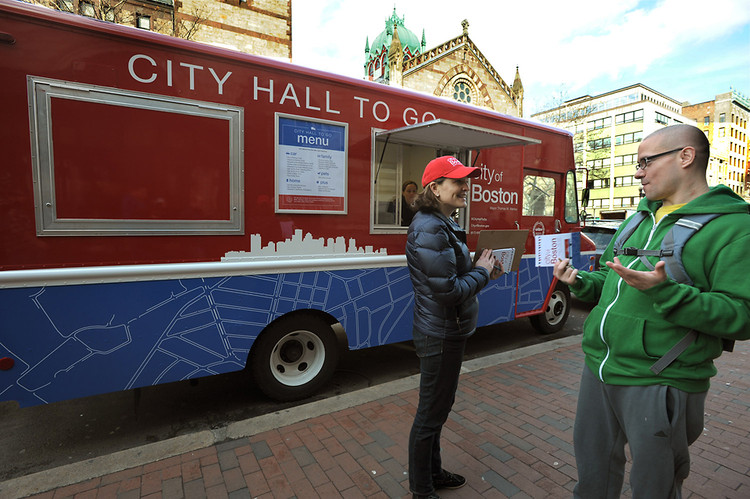
“In Boston, the mobile business craze is getting a civic twist with the city’s new “City Hall To Go” truck, a slick new motorized municipal office with a “menu” of common public services”, writes author Andrew Price of Fast Company.  He goes on to mention, “Residents can visit the truck to get a dog license, dispute a parking ticket, register to vote, and even get a birth certificate. Or they can just drop by to ask a question or register a complaint. The idea is to give residents face-to-face contact with their government without requiring them to trek to some central office. That means it could be especially useful for people who work long hours, have mobility issues, or live on the unconnected side of the digital divide.”

Take away: With the new year it is a great time for nonprofits and governments alike to try something new.  Why not try something like this?  Whether in a food truck, booths at local events, or in places that are commonly visited attempting to  bring your mission to where the people are can’t be a bad idea.  Way to go Boston!


Credit: Andrew Price writes about the future of the planet, among other things, for The Atlantic, Fast Company, and GOOD

Should I be investing time in Facebook for my nonprofit?

What is Facebook today?

Today Facebook is a controlled way for people to connect with existing friends. Most users simply use Facebook to engage with people they already know.  Facebook is a relationship tool, it is not an advertising platform (today anyway). So if you are in the nonprofit space it is a great tool for you to use to spend time building connections and relationships.

So should you be investing time and effort in Facebook?

To truly determine how much time, if any, to invest in Facebook, you will need to know your donors/constituents. Do they use Facebook? How often? Do they use another social network more often? Has your nonprofit seen any benefits from being on Facebook? Look at your marketing strategy to see if your time and resources could be spent more effectively somewhere else.

To determine what your organization should do, you will need to determine what your goals are.  Do you want to build Facebook as a primary engagement tool or do you just want people to be able to find you if they look?

If you decide that your organization can benefit from Facebook, the following are some keys to making your efforts more efficient:

  • If you decide to invest in Facebook also invest in a measurement tool.  I recommend Sprout Social because it is easy to use and affordable.
  • Using your measurement tool, determine what information your donors love to see, read, and share!  For us, people love to hear about anniversaries.  The tool is truly about relationships, and that shows in our results.
  • Make it worth the visit; reward people for visiting your Facebook page.  This will make them want to visit more often.
  • Make certain resources only available on Facebook to encourage users to keep an eye on you.  For nonprofits, think about a special event for Facebook friends only.
  • Pictures, videos and articles are highly popular on Facebook. If possible, make sure every update includes an image or video.  Be sure and upload pictures during events and following events.  At your event make sure you announce that the photos taken will be on your Facebook page following the event.  Check out the Color Me Rad page for a great example.
  • Do not post every day. As a small nonprofit, you may only need to post once or twice a week.  Quality or quantity is the rule for sure.
  • Post when people are on Facebook. According to the Huffington Post, the best times to post are weekends by far, followed by evenings and early mornings.
  • Use the Promote button for your most important posts to push them to the top of the news feed. This does cost money, with the exact rate depending on your geographic location and how many users you wish to reach, but it can be worth it for advertising posts.

Take-away: For those nonprofits in the business of building relationships, Facebook is a great way to truly build engagement.

This post was modified from the original post for the nonprofit audience: http://smartblogs.com/social-media/2013/01/03/how-much-time-should-your-business-invest-facebook/

What do I do? My donors are 80+ and not adopting new marketing.

In my session hosted by the Hill Country Community Foundation, I had this question.  How do I reach donors that are 80+ and not adopting social media, email, or any other new technology?

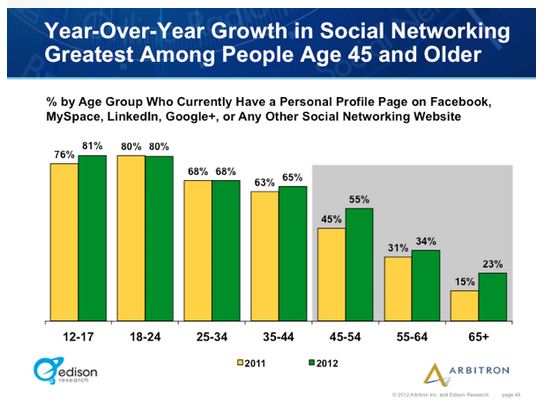
Well, I think the person asking had hoped I would reveal the answer to how to get this demographic to participate online, but I don’t have the answer to that question.  Though trends show that individuals in the 65+ demographic are adopting social networking I don’t think they will ever be key adopters.

As such, it is important to start to develop a marketing plan that satisfies the needs of your current donors while building a presence that will allow you to target new donors.

Here are a few ideas for bringing awareness of your organization to a younger generation of donors while maintaining your existing one:

1. Think about children’s programs.  Can you do camps, tours, classes, etc…programs like this allow you to foster new relationships while continuing to offer existing ones.

2. Use multichannel marketing mixes in your campaign development.  For example: don’t just mail an event postcard.  Mail a postcard with a Facebook link to the event.  This way your non-Facebook donors have the information along with your Facebook fans.

3. Meet your donors where they are, but don’t forget about the future.  It is important to be in the social space while maintaining your existing donor base.  Consider using college students to help your organization gain social presences without distracting efforts to maintain your current presence.

Take-away: As I learned in Girl Scouts long ago, “Make new friends, but keep the old.  One is silver and the other Gold.”

Looking to 2013

15254600-enter-2013-happy-new-year-computer-keyboard-close-up-concept-for-technology-or-cloud-computing

This is the time of year that many individuals donate to nonprofit organizations, but will that be enough? A new survey report entitled Non-Profit 2013 Financial Outlook, Reporting, & Systems reveals the top priorities and challenges facing nonprofits in 2013. According to Shereen Mahoney, CEO of Brittenford Systems “2013 will likely require non-profits to rethink revenue model and income strategies, while improving strategic planning and program results.”

There are a number of aspects affecting the challenges nonprofits are facing including, reduced government funds, a drop in charitable donations, consolidations, increased competition, increased demand for services, and the list goes on and on.

But, without nonprofits so many needs will go unmet. Nonprofits are also job creators. In fact, during the recessions of 1990-1 and 2001-2, nonprofits actually increased their number of employees by 2.38 percent a year while for-profit jobs declined at an annualized rate of 2.2 percent. And, while many people are not aware of it, the nonprofit community is an enormous contributor to the American economy: It provides 5.5% of the nation’s entire GDP or $751 billion worth of output.

So, what can be done?

The key to turning things around for nonprofits is… TECHNOLOGY. Okay, you’re not surprised to hear that from the Marketing Director of a technology company, but, it is true! Technology can help tremendously in three key areas: creating awareness, reducing costs, and increasing donations.

First, creating awareness.  In order to be considered for donations, the public must be aware that your nonprofit even exists.  Awareness can be established through many channels, but for the sake of this post we will focus on the value of technology and social.   As you can see below, the growth continues to increase year over year, and while it may not directly tie to increased revenue.  Social does tie to increased awareness.Edison-research-graph

Second, reducing costs. You have probably already seen your new budgets and my guess is they call for flat expenses or reduced expenses and increased donations.  How are you supposed to do that?  Well, a Constituent Relationship Management (CRM) system and a proper fund accounting system can help your staff achieve much more with less. Automating financial functions through an integrated accounting system where the donor’s details have to be entered only once and are accessible to all staff makes good business sense.  It can help you with audits, reporting, and even bringing in more donations.

Plus, fundraisers all understand the value of building relationships.   A CRM will allow you to more easily recognize and reward your donors, track the actions of your donors, and even organize the relationship you have with your donors. And the value of all of this is of course; my favorite topic, donor loyalty.

If that is not enough, the cost of quality software as really become more affordable with subscription offerings.  For example, you can get a complete end-to-end solution with Sage starting at $249 a month.  That price point puts technology in the hands of nonprofits that were not able to afford it before.

Finally, increasing donations.  I spoke to nonprofits all year-long and surprisingly the vast majority are still not doing online donations.  It is a must!  I am not a proponent of getting rid of direct mail campaigns; I love direct mail.   I am a proponent of integrating all of your marketing channels to drive to one call to action.  Donate!  And, increasingly, your younger donors expect the convenience of visiting your website or Facebook page and clicking a link that drives them directly to an easy to donate to, fully integrated form.

Plus, online donation technology allows you to create peer-to-peer fundraising campaigns, simplify event fundraising, and so much more.  All of which could increase donations, and allow you to find new prospective donors.

Take-away: For the sake of the economy, take a look at technology this year.  If you are already using technology learn something new about it, attend a training class, or get with a peer group.  As with all things technology is unendingly  changing and improving.  Learn more to do more, and have a great 2013.  Happy New Year!

Hap Hap Happy Holidays

I love the Holidays.  I love wrapping presents, giving them, eating, and spending time with my family…did I mention eating?  As I finished my last gifts, I began thinking about how truly blessed I am in this life, and I just wanted to take a moment to thank all of the many people who made my 2012 so wonderful.

First, a special thanks to my Mom, Debra Bailey.  She is an amazing woman.  She is kind, giving, and always, always willing to help. Whether it is picking up the kids when I am traveling, giving Jason and I weekend to send time together, or simply baking us one of her amazing pies, she is always around and always the first to say YES!  I think I learned most of the things that have made me successful from her.   The spirit of Yes as we call it around here is very powerful.  Love you so much Deb!!

My hubby, the famous and great JASON BRANDT, we have had such a wonderful year.  He is so supportive and willing to pitch in.  Yes, not only does he go out to protect and serve everyday; he does the dishes and the trash.  I feel so blessed to have found my love so early in life, and I look so forward to all the things we have to come.

To my beautiful babies, Brylee and Colin, you are my reason for living.  You give me purpose, love, and hope for even better things to come.  I love you both so very, very much.

To my sister, Michelle Hensel, what an amazing lady.  Thank you so much for your unconditional love, encouragement, and free therapy.  But most importantly, thank you for my adorable and lovable Brenna, Cami, and Cade.  XO.

The my friends, my circle of trust and my LG posse.  I love you girls, you make me laugh, dance like crazy, and against my better judgement sing Karaoke.  (And, you still love me.)  I never underestimate the power of a great friend, and in all of you I have found exactly that.  Lots of love to you all.

To my friends in the nonprofit world, what a great year.  Thank you so much for allowing me to be a part of all of the wonderful work you do.  I am always humbled by the amazing stories and experiences you share.  Thank you for what you do.

To Sage Nonprofit Solutions,  thank you so much for allowing me to do what I love to do.  What a wonderful group of people to work with.  Most importantly, to my team, I am so lucky to have a team of such amazing women to work with.  Thank you all so very much!

Last but not least, for all of those that are not called out, and I know there are a lot of you and probably someone very important that I missed.  (That’s always the risk of writing a blog like this.) So, if that is you, thank you so much for a wonderful 2012, Merry Christmas, and Cheers to a Happy Happy New Year!

Take-away: Be at war with your voices, at peace with your neighbors, and let every new year find you a better man.
-Benjamin Franklin

Nonprofit Lessons from Black Friday

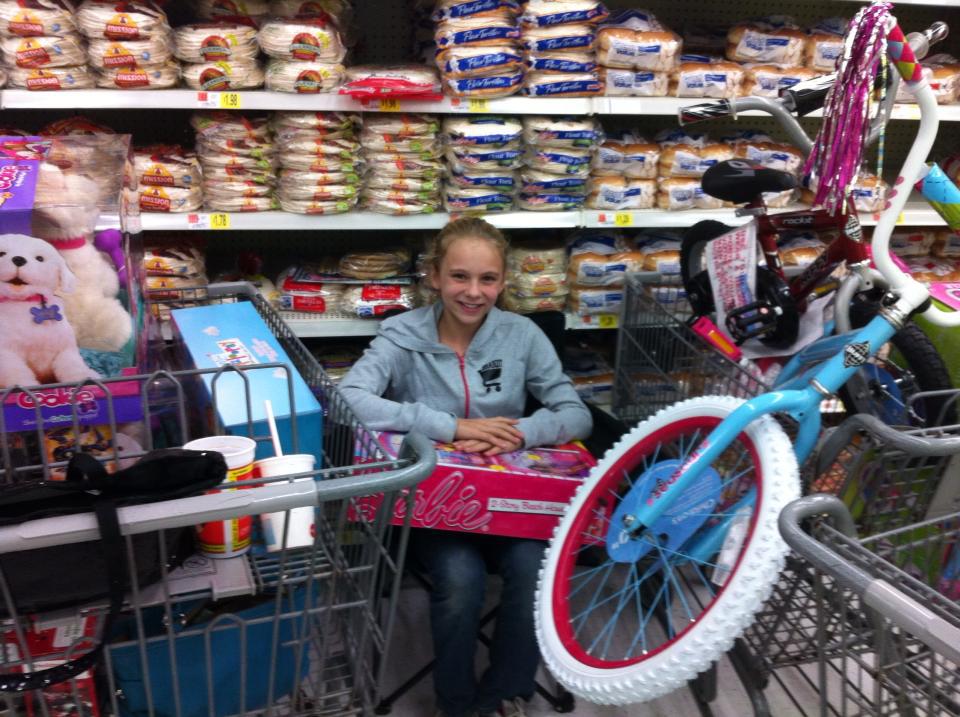
My favorite (I say that about every holiday) holiday has come and gone.  Yes, I am one of those crazy shoppers who just after saying thanks for all of my blessings embarked upon a 13 hour shopping spree.  It has become a tradition with my family and I love the social aspect of it all; the great deals don’t hurt either.

My Daughter’s Inaugural Black Friday Trip

As I began to plan and prepare for the big day (a week ahead online) I was quickly overwhelmed by the volume of emails I received.  I am confident that I received over a hundred each day.  What surprised me most about this pre-week email onslaught was that I had not received one single email from any of the nonprofits I support.  I figured it must be in spam, but no indeed there was nothing.

Then the big day came, went, and cyber Monday was here.  Again, the emails flowed in and again, not a single email from any nonprofits.

Here’s an idea: if you are a nonprofit that serves children during the holidays, why not ask shoppers to pick up a few extra things for those in need.

Surely, there are nonprofits that sent things out around the big day.  I must have just missed them or maybe they are all waiting for today, Giving Tuesday.   Is your nonprofit doing something to raise awareness or funds today?

Take-away:

1. Make a Plan.  Year end fundraising right now, don’t miss the biggest fundraising opportunity of the year.

2. Jot it down.  Black Friday & Giving Tuesday will be here again before you know it.  These days presents a great opportunity to reach out to your donors that are in the spirit of spending, so don’t forget what could be an important ask for your nonprofit.

5 Tips for Government Grant Writing

Republished from www.sagewords.net:

Last week at the GPA* Annual Conference, I attended featured speaker Phil Maestri’s presentation. As Director of Risk Management Services for the US Department of Education he has a significant amount of experience evaluating grant proposals. During his presentation, he shared the top five areas his team uses in evaluating grant proposals.  I captured his tips for you here. Use them next time you submit a government grant proposal.

  1. Clear Objectives– According to Mr. Maestri, too often grant proposals fail to include a CLEAR objective.  Be sure the objective you set is easy to understand and articulate in your next proposal.
  2. Time Frame– Set a clear time frame; 2013 is not a clear time  frame.  Set and communicate clear and specific dates in your proposals.
  3. Logic Models– While logic models can be confusing to understand and even more difficult to articulate, there are a few key aspects grant makers are seeking.  As you compose your grant keep these areas in mind.
    • Define what success looks like.
    • Prove that the activities in your proposal are indeed valuable.
    • Share the expected return on investment.  Define how your proposal is going to make a difference.
  4. Will it Work– Grantors want to know if your proposal will actually work.  In your proposals, point to proven success in your own experience or even in other models.  If the proposal is innovative and existing models are not to be found, share an educated hypothesis that details risks and benefits.
  5. Measure– As with all grant proposals, it is critical to share how you plan to measure the success of the grant.  Share what measures will be used, when success will be evaluated, and how said measures will be shared.

Take-away: Maestri’s, parting advice to grant writer’s is to be clear that the grant you are applying for fulfills your nonprofits mission.  Too often he finds that organizations apply for grants outside of the breadth and scope of the nonprofit.  In those cases, even if awarded the grant may not be a true win.  Writing grants can be extremely complicated, so keep things as simple as possible, be transparent and accountable; and you are sure to find success with your next proposal.

*GPA is the Grant Professionals Association, a nonprofit membership association, builds and supports an international community of grant professionals committed to serving the greater public good by practicing the highest ethical and professional standards. GPA is THE place for grant issues. We provide professional development by way of an Annual Conference and Webinars, professional certification (GPC), Journal and E-Newsletter, local Chapters, member benefits and more! http://www.GrantProfessionals.org.

How To: Create a Comfortable Nonprofit Space

“Nonprofits have a lot to gain by creating affordable, comfortable spaces for their nonprofit environment,” according to interior designer, Jodi Harmon of Finishing Touch Interiors.

When I conducted the photo shoot for the Atlantic Marine Fisheries Commission, I was blown away by how wonderfully they incorporated their mission into their space.  My favorite touches are the fish, you simply cannot get any closer to their mission.  They also incorporated the logo, waves, and the perfect color scheme throughout the office.

To get this look for your space, start with a plan.  Hire a designer to really invest in a strong workable space.  Don’t have the budget to hire a designer?  Consider hiring a designer for a few hours to help set up the plans you can implement on your own; and if there is no budget for that, check out ideas on Pintrest.  Find something you like and copy it for your space.

Next assess the space you are in today.  What needs to go?  Are things worn, faded, torn, cluttered?  Does the furniture you have meet the needs of your office, or is it simply there because it was donated to your organization?  How about lighting?  Lighting plays an important role in creating a productive space.  Make sure to allow natural light into the room when possible, add lamps for accents and additional lighting.  Keep in mind, the space you are in tells a story about your organization.   Does your current space tell the story it should?

Last implement your plan, rework existing items or purchase new ones based on a design plan.  Consider these small things that can make a big improvement:

  1. Change lamp shades to add color a room.
  2. Paint dated furniture.
  3. Use rugs to warm the room and cover worn flooring.
  4. Add accent pillows to create a splash of color.
  5. Bring in real plants.
  6. Bring in photography or art work that shares your mission.  Consider making this a project to garner awareness for the organization and enhance the space.
  7. Paint.  Paint is a relatively simple and inexpensive way to add interest to a space.

Take-away: The space you create for your nonprofit impacts the people who make your mission happen, so say good-bye to grey paint, mismatched furniture, and that vase that was donated to you 20 years ago.  Say hello, to a vibrant or warm welcoming new space.

My Favorite Part of Sage Summit, Sage Cares

Sage Summit was a bustle of activity this year.  The usual meeting and greeting of customers and partners along with some great educational discussions were abundant.

For me, the highlight was Sage’s continued commitment to partner with a nonprofit customer to give back through Sage Cares.

This year’s customer was Martha O’Bryan Center and together with our customers we were able to add several crates of books to the library at the center along with a small monetary donation.

The center is a family and community resource center located in one of Nashville’s poorest neighborhoods.  They provide a continuum of evidence-based, education-focused programming for children, youth and adults in poverty.  Martha O’Bryan Center’s goal is that all children and youth in their community will have access to quality education and successfully transition to college and a career, while supporting the whole family to overcome barriers to success through education, crisis management and community resources, and a long time Sage Nonprofit customer.  They are truly AMAZING!!!

Take-away: Meeting with the development director and having the opportunity to share in what they do, even in a small way, made for a tremendous week.