One, two, three…Smile!

Donor photos are one of the most valuable pieces of donor experience content a nonprofit can have.  After doing a recent customer photo shoot, I was thinking about how wonderful it was to connect with our customers and what a huge asset we had in the photos.

I often see nonprofits with the “shiny, happy people” stock photos and shudder.  There is such a huge opportunity for nonprofits to connect with their donors and volunteers through photography.

Use Photos to Increase Web Traffic:

A report from Curata not surprisingly suggests that bringing visual components to website content is key to boosting engagement, and ContentLEAD found that adding images to your pages can result in 47 percent more clicks than pages with text-only articles.  Use images that illustrate your story or further convey your mission, purpose and goals.

If you want to learn more about the value of adding photos and tips to improve your search engine optimization just watch Google’s related Webmaster Central video.

Use Visuals to Tell a Story:

Another form of visual content that has helped web content marketing campaigns is the infographic.

Infographics have become increasingly popular for organizations attempting to differentiate their website from others, or those trying to draw more people to their sites.  I would suggest that nonprofits start thinking about infographics for annual reports.  They are more sharable, easier to digest, and more affordable.

Here is a great example of an infographic for the new Sage Nonprofit Cloud Suite.

Use Photos to Enhance Social Media:

Nonprofit use of social media is growing by leaps and bounds.  You can see just how nonprofits are using social media in Mashable’s infographic. In the study they found that 92% of nonprofits are using at least one social media button.
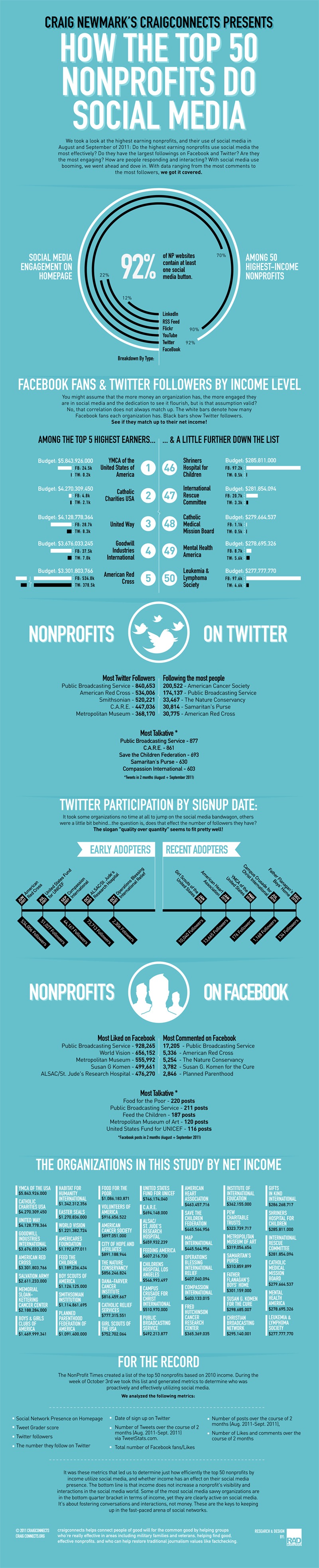
Using Facebook, Twitter, Pintrest and other social networks do help nonprofits reach donors, but many NPOs are missing the opportunity to really leverage the networks.  Web Liquid recently found that 37% of users that saw visual content Liked the page, compared to 31% who saw video content, 27% exposed to text updates and 15% shown a link.  Pretty interesting!

Take-away: There are many ways to add visuals/images to your properties here are a few:

1. Add images to text content on your site.

2. Add photos of your employees, volunteers, and even your board members.  (Don’t use bad, grey headshots.)

3. Share images of your events on Facebook, Pintrest, or Google+.

4.Tweet photos from everything you do.

5. Capture photos of your donors and volunteers in action, just like we did!

1Thanks for the valuable info that helped build this post. http://contentlead.com/blog/put-a-face-to-your-small-business-name-with-visual-content-that-drives-clicks-and-leads
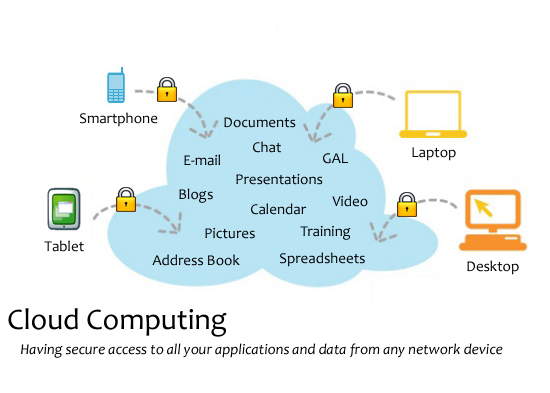
Ten Reasons Your Nonprofit Should be Web-Based

Web-Based or cloud applications are all the rage right now, you hear about them everywhere.  You are probably wondering how they can benefit your nonprofit, and what if any of them are a good fit for you. There are so many types of cloud services today it can be a bit of a daunting question to ponder.

We are going to keep things very simple.   Here are ten reasons you should learn more about web-based services in general, and how they can potentially benefit you and your nonprofit.

  1. Save Time: Running a nonprofit is like having two or three full-time jobs. Because there are so many things that we could be doing–time–is one of the most valuable assets you have. Web-based services typically equate to a substantial time savings.  From on the go email to no longer having to install software updates, web services can really make an impact on efficiency.
  2. Share and Empower: I have found that having key applications in the cloud makes it much easier to share information and skills among my team.  This means my team is more empowered to do things that only I used to be able to do. That is a win/win.
  3. Work from Anywhere: I spend a lot of time traveling, so being able to work, in addition to accessing my full email and calendar from my mobile device is critical.  This allows me to be productive when I am waiting in lines, at restaurants, and anywhere really.  The thing I love most is that when I am in the office; I am not playing as much catch up.
  4. Keep in Touch: When I am traveling I like to keep in touch with my family via mobile video calling, but I also use it to stay in touch with donors and my team.   Video calling adds a face to face interaction (which I am a huge fan of) in a very convenient way.
  5. Stay Safe: Your data is your lively hood.  Backing it up in a secure environment is essential. 
  6. Learn More:  Take time this summer to use a web-based survey tool to learn more about your donors.  The information you gather can be used to build a more successful year-end campaign.  I recommend Survey Monkey because it is easy to use and the base product is free!
  7. Build Awareness:  I meet nonprofits all of the time that have not yet started an email marketing program.  There are a multitude of web-based email solutions that will really make getting started easy.  Consistent communication is key to building awareness for your organization.  So, what are you waiting for? 
  8. Network Online: Social is another blog post all together, but becoming social and networking online is critical to your nonprofits future.  Make it your goal to join the top 3 by the end of summer.  (FYI Start with Twitter, Facebook, and Linked In.)
  9. Collect Donations: My new favorite web-based service is mobile payment processing. Check out my last blog to see why I love it so much!
  10. Get Current: Summer is a great time to consider moving your old solutions to the cloud.  Many of you close your year in June, so it’s a great time to start fresh.  Think about how your organization might benefit from moving your accounting, fundraising, and/or grant management solutions to the cloud.  Contact your solution provider and make it happen. 

Take-away:  Cloud or web-based solutions can really make your life easier, increase productivity, and most importantly enhance your fundraising efforts.  This summer if you aren’t already using web-based services, give them a try to see how impactful they can be.

Three fundraising lessons’s from Apple’s ipad

Raise Funds Faster than Apple Sells iPads

Apple’s iPad has more than 15 million customers, and I have joined the ranks of the 15 million.  I was convinced that I didn’t need an iPad, but now I am not sure how I will live without it.  

As nonprofits, I think we have an opportunity to start thinking more about how we can innovate and borrow best practices from those that are doing it well.   

Mind Map

1. Be cool!

iPads are undeniably the must have gadget of the young and the cool. They are easy to use and visually appealing.  We need to make sure that our organizations are attractive to younger generations. 

Organizations that are doing the work to appeal to younger generations are becoming wildly successful.   If you need an example just take a look at charity:water. They embody “cool”, and they are by no means the largest fundraiser in the space.  They are using their “cool” along with some fantastic marketing strategies to very successfully connect with GenX and GenY donors. 

2. Be fun!

The iPad is used about 1/3 of the time for games.  It is alluring to step into the shoes of a race car driver or a super hero even if it is only for a few minutes. Think about how to make your next event, program, or project fun.  Is there a way you can turn your giving program into a game?

3. Be Shareable!

The Ipad makes it easy to share information. You should do the same for your organization.

Nonprofits can use simple tools like forward to a friend in emails or share in social media icons.   Tools like Sage Fundraising Online shown above allows supporters to promote their fundraising efforts through Facebook and other social networks; or let supporters embed a form directly into their personal website or blog with a simple copy and paste. 

All of these options allow your advocates to share information about your organization easily, just like the iPad!

Take-away: Think of ways you can be cool, fun, and share more with your constituents, and for more tips and to download the full presentation and mindmap visit my slide share account @ “Ipad Like Innovation for Nonprofits.”

Engaging Donors in an Online Age

Tuesday, I will be presenting at Emerge 2012.  The presentation will focus on how nonprofits can engage with their donors online.  The crux of the presentation revolves around three key aspects:

1. Listen– To be successful online nonprofits need to invest time in listening to their constituents, and engaging in authentic conversations.   By listening and engaging online nonprofits can create a 1:1 conversation with their donors in a 1:many environment.  

2. Learn– Nonprofit organizations should invest time and money in their online programs.  They should optimize their websites, create engaging donation forms, invest in integrated programs that include online elements, and they should make sure that their online story is just as (or more) engaging than their in person story.

3. Make in Easy- It is critical that organizations make it easy to engage online.  If the basics are covered, they should all be writing blogs, joining forums, providing RSS feeds, and participating in social media.  Thus making it genuinely easy (and fun if possible) to interact with their organization online.

Take-away: Check out the entire presentation, and please share some of the tips that you are utilizing to engage with your donors online.

Check out the entire presentation to learn more tips and tricks for engaging your donors online.

Engaging Donors in an Online Age on Prezi

Things I have learned from our nonprofit customers that you can use!

We just hosted our first Customer Success Tour.  The idea, which seems like a no brainer now, had never been done before.   We wanted to bring our customers together.  Share where we are going and see where they are and want us to be.  Simple!

The event was an amazing success.  Here are a few of the top lessons I learned from our customers that you can use for your donors:

1. Communicate- Your donors want to know more.  Email is not enough.   We need to share what we are doing multiple times, and we need to share it in multiple channels.

2. Share- Your donors want to know how the organization is impacting others and what others are doing in the organization.   One of the primary benefits of the success tour was being able to share the success The Jazz Foundation is having with Sage Fundraising Online.   It was a win/win for everyone in the room.  We were able to share the success of  great product, and our customers were able to learn a great deal about online fundraising.  You can do that in your organizations too.(Thanks Petr!)

3. Give them what they want– I have said this a million times and heard it a billion, but it bears repeating.  If you are sharing information about dog rescue with a cat person the message will not be heard.  Target your audience based on what they want to hear and what they care about.

4. Timing- New York in December is beautiful, but it is also hard to navigate and a very busy.   Sadly we inconvenienced our customers by bringing them into the city during the Holidays.   A great lesson for us and you.   Is the timing of your events suited for your schedule or the schedule of your donors?   Make sure they both jive.

5. Answer the questions– A great learning for me was that we need to have a more succinct resource for supporting our customers, so we put together  a customer resources page to help answer their questions.  Time and again, I stumble upon nonprofit pages that don’t answer the basic questions of donors.

  1. Who are you?
  2. Why should I give you my money?
  3. Are you accountable for the money you have gotten before?

These are must have’s for all nonprofit websites, and it was a great reminder for me.

Take-away:  All in all, I learned more from those four short hours than I have in my five years with Sage.  When was the last time you got your donors together and asked them how you were doing?  Maybe it’s time!!!

Free:Happy::Video:Nonprofit

The online video market continued to gain momentum in 2010, with an average of 179 million Americans watching video each month, according to a new white paper from comScore. Engagement levels also rose during the year, with viewers watching online videos more frequently.  So, is your nonprofit using video to engage donors?

If not, now is your chance.  Visit flipforgood.org and get your free Flip Video camera from Cisco. 

After you have it, here are some tips for engaging donors with video.

  1. Post it on YouTube and your site–It helps with search engine rankings.
  2. Keep it short and make it interesting
  3. End with a call to action

Take-away: Go to flipforgood.org and get your camera, and then start filming!

Can a bad event name or campaign help your nonprofit?

I recently read a great blog post about bad brand names, and that got me thinking.  Would a bad event name or nonprofit campaign have the same effect.   Here are some pros and cons to think about before you embark on a bad theme.

Pros:

1.       Stands Out in the Clutter

We live in an era of clutter on every front and that includes event clutter.  In a sea of events that set out to be sweet, memorable, good and the like a bad, funny and sometimes shocking name definitely stands out. 

Project Kaisei, a non-profit organization dedicated to the prevention and clean up of marine debris, is doing something a little bit taboo with their latest fundraising campaign—they are threatening a goldfish with polluted waters to entice potential donors to take action. Their Facebook campaign, ‘Save Kai’, put a goldfish named Kai in a segregated space within an aquarium filled with plastic pollution.  Supporters are invited to make donations to have pieces of the plastic removed from the tank before Kai is released into the deadly “Plastic Vortex” at the end of the month.
 
2.       Arouses Curiosity

What happens when your friend tells you about a bad habit of another friend or a colleague tells you that someone else in your team is lazy and inefficient?  Chances are you are ready to listen, even willing to accept and propagate the idea simply because sad as it is we tend to be more receptive to negative ideas. 

This is precisely what a bad campaign works on…our innate curiosity about the bad or the negative.  We cannot stop ourselves from wanting to know more about a negative consequence!

3.       It’s Controversial and in the News

PETA Ad

A great example of a successful "bad" themed advertising effort.


Bad themes are like bad news…controversial and in the news! This means that a bad theme is like an instant ticket to fame. 

The shocking PETA ads are a prime example of in the news.   Whether you like them or not, you can’t deny the news coverage PETA has garnered from the sometimes scandalous ads.


Cons:

 While bad nonprofit themes can do and have done wonders for many a nonprofit using them, they will not always produce the best results, here’s why…

1.       Short Term Effect

A bad theme will initially arouse curiosity, shock, dare, tease but its effects will largely be limited to the short-term.  Only a determined effort to deliver quality and the ability to keep people interested in the organization will help the organization retain donor interest and further build on it.  Simply relying on the theme or event is not enough!

 2.       Could Backfire

Bad campaigns are a strategy that could backfire simply because they have the potential to turn people off and offend them even while having the ability to pique curiosity and grab attention.  By all means pick a bad campaign but weigh the chances of this backfiring as a brand building move too! 

3.       Cannot Work Unless the Offering is Rock Solid

At the end of the day people donate to an organziation because they believe in the mission.  They don’t donate just because they like the name.  So unless your nonprofit is a rock solid offering a bad campaign or event could very easily end up ringing the death knell for your organization.

 Take-away: Think before you leap.  A bad name may be just what you need to get the awareness.  Be smart, prepared, and ready to take action before and after the launch to ensure success.